

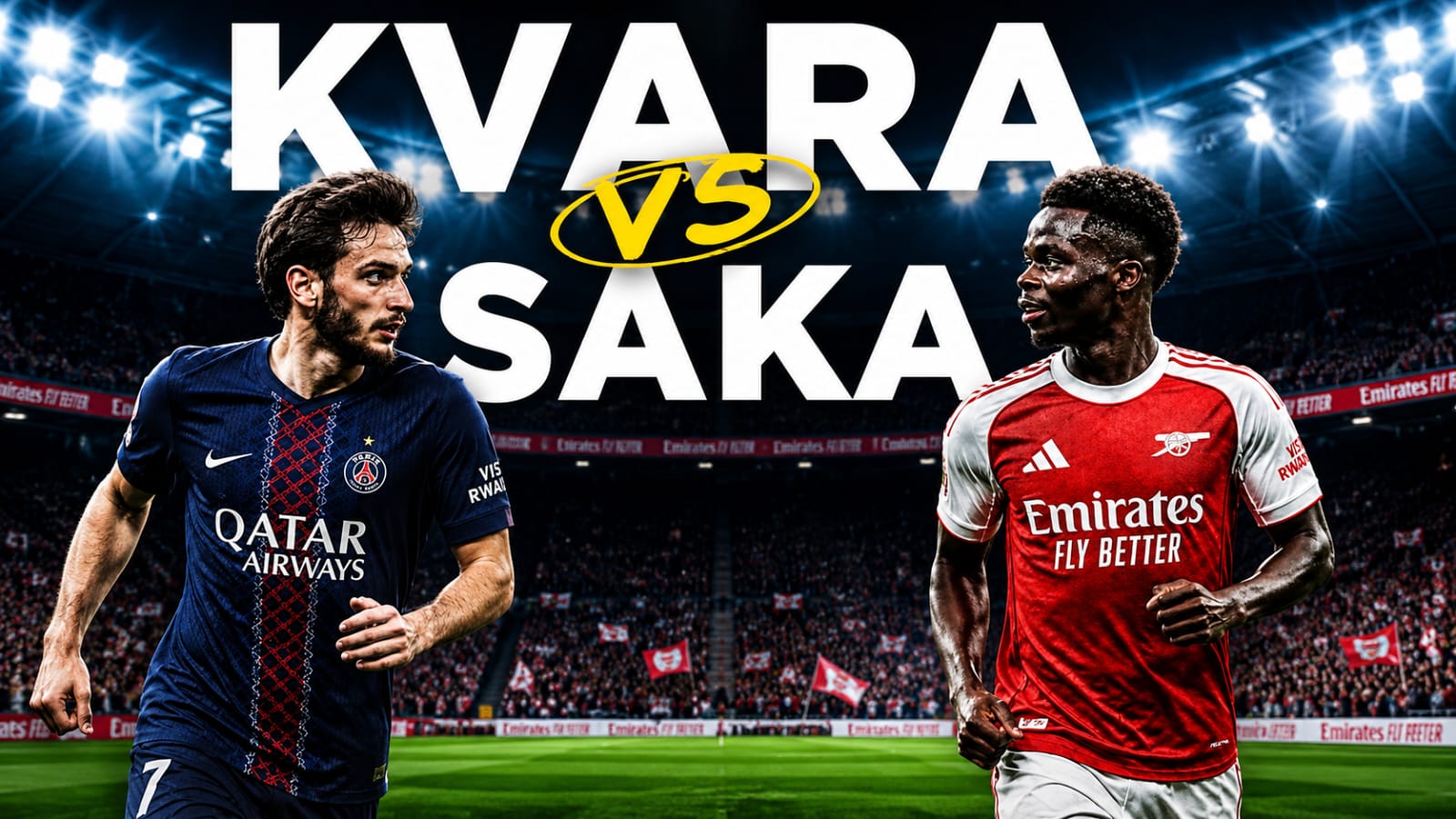
The final of the Champions League is at the Puskás Aréna on May 30 with a match that appears to be too good to be the event: Paris Saint-Germain, the defending champions, vs Arsenal, a club that has had 20 years to have a second crack at European glory. This final, perhaps to be settled by a single head-on collision on the field – Khvicha Kvaratskhelia vs. Bukayo Saka – may be added to all the tactical interest which Luis Enrique and Mikel Arteta will bring to Hungary. Two wingers. Two football sides of existence. One trophy.
The Georgian Dynamo
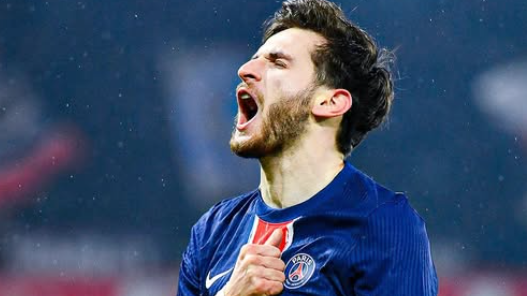
Kvaratskhelia is the key figure of the European campaign of PSG. He was a popular player at Napoli and won the historic 2022-23 Serie A, and then joined Paris. He has scored eight goals in 28 Champions League matches this season, and this has been supplemented by his dribbling and acceleration, which destabilize the defenses. Luis Enrique is trusting in his skills of working in a tight space, and he has proven his skills against the best. A second consecutive Champions League will see him being one of the most successful wingers of his century.
The Homegrown Engine
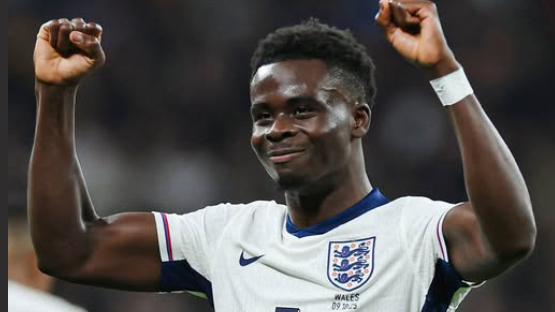
Saka, in his turn, is burdened with the twenty-year wait for Arsenal. The England international has also emerged as the most reliable attacking weapon by the club this season, with his low-center-of-gravity dribbling and smart moves in conjunction with the midfield of the Arsenal team. He is not only the most prolific striker in the Arsenal team; he is their emotional tuning stick, a player who has been in the academy to European finalist without once having to leave his boyhood club. This is a competition that Arsenal has never won. In the final of 2006, against Barcelona, Arsenal played with ten men and lost 2-1 after taking the lead. Saka was not even born. He now has the burden of ending that drought on a fanbase that has seen Manchester City and Chelsea win this trophy, as Arsenal puts it back together.
Where They Collide
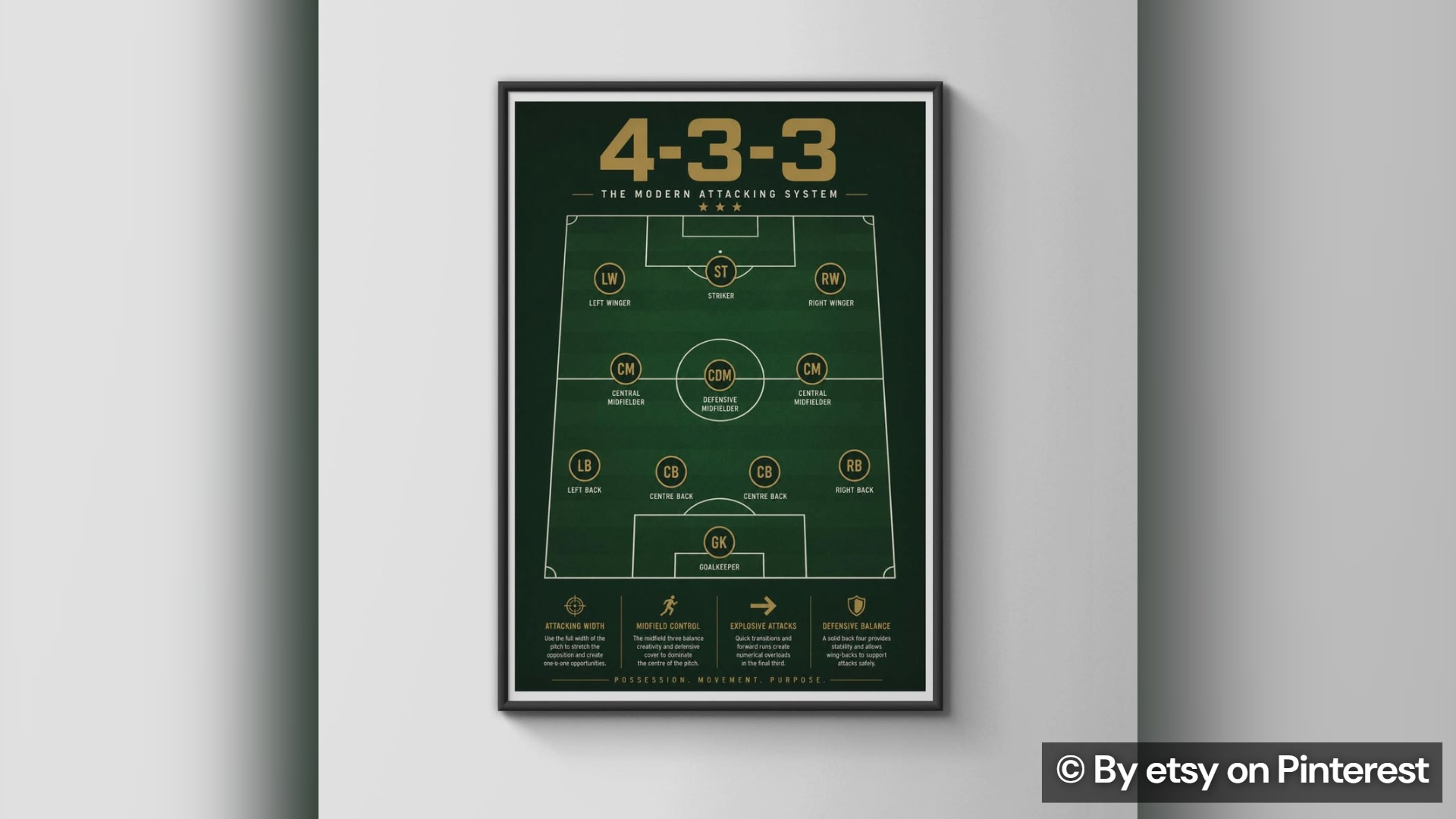
Tactical interest of this last is the manner in which Arteta and Enrique use their stars. Kvaratskhelia works on the left, either cutting to the byline or driving to the inside, rapidly. On the right, Saka adopts close control and intelligent combinations with the Arsenal midfield. Although they do not necessarily reference one another, they significantly affect each other. Should Kvaratskhelia stress the right-back of the Arsenal team, Saka might need to cover back, restricting his offensive. On the other hand, by using Saka to press PSG’s left-back into defense, Kvaratskhelia is deprived of the chance to isolate defenders.
This is complicated by the midfield battle. The center will be challenged by Declan Rice and Joao Neves, but this final will be torn and pushed in the flanks. The defensive display of the European campaign, by Arsenal, which has conceded reluctantly by the knockout situation, seems to indicate that Arteta has established a mechanism created to counter precisely such a form of brilliant individual performance as Kvaratskhelia offers. The pressing structure of PSG is, in turn, so advanced that it pushes Saka to occupy the preferred cutting lanes and makes him make decisions in situations when he is at a disadvantage.
The Burden of the Past
In the case of Kvaratskhelia, the latter is the completion of his journey out of Georgia, a journey that has been hastened by the Scudetto of Napoli, who has now arrived in Paris. He is a Ballon d’Or candidate, and a second consecutive win in the Champions League may cement him among the elite wingers. In the case of Saka, the prizes are just as high. The Puskás Aréna, named after the Hungarian football star of Hungary, symbolizes history in the country because Ferenc Puskás won three European Cups with Real Madrid. It is either Kvaratskhelia or Saka who will take a step closer to that legacy on May 30, or will be witnessing the other do so.
What the Numbers Say
Statistical comparisons indicate various profiles and no clear hierarchy. Kvaratskhelia is a master of one-on-one scoring and progressive dribbling, which implies that the player creates imbalances among the defense. By contrast, the defensive input and passing quality of Saka make him a more versatile two-way player, whom Arteta is confident in keeping structured without losing his creativity. Each profile is equal, each is appropriate to its system.
The Decisive Margin
Collective perfection seldom prevails in the Champions League finals. They are dependent on individual brilliance, interfering with the organization of the team, such as a dribble, a cross, or even a chance taken by a skillful player. Such moments can be created by Kvaratskhelia and Saka. The point is what system allows you to do something like this, and who is the player that will use his chances and stay calm.
Budapest, the weather, the people, and the kick-off time of 18:00 CEST will have an effect on the game. PSG will be the second team in the Champions League era to successfully defend the title, and Arsenal will obtain its first trophy. Two wingers have brought their teams into the knockout round; one of them will win the trophy, and the other will be the spectator. The decisive duel begins, not with the whistle, but with each strategic decision of Enrique and Arteta to liberate their star or restrain the enemy.



Leave a Reply