

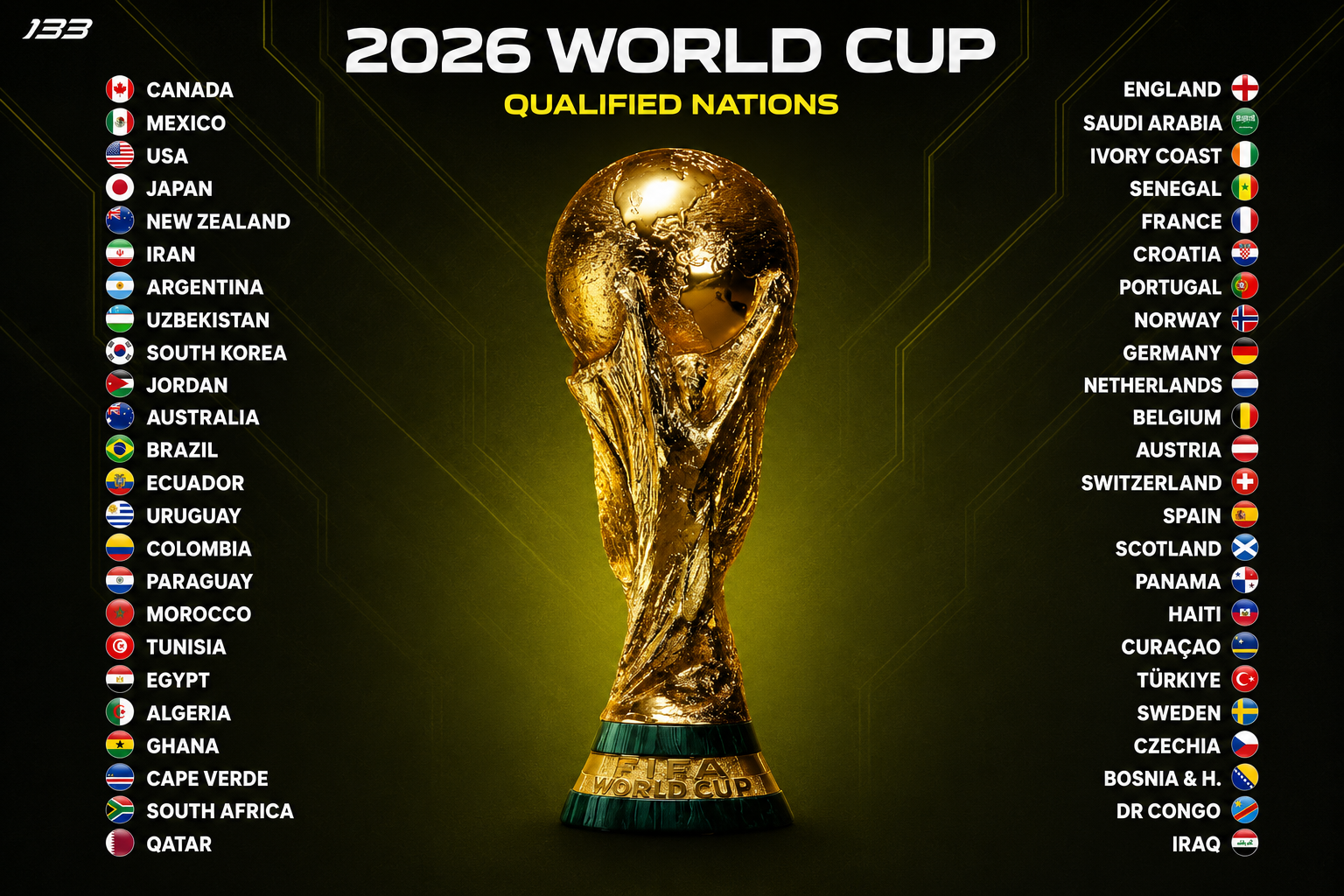
The increase in the number of teams of the 2026 FIFA World Cup to 48 alters the qualification landscape. Additional spots in each confederation decrease the obstacle of new countries. Asia has now 8 direct slots and a playoff spot, Africa 9, CONCACAF 6 and Oceania a direct spot qualification, first time ever.
Such structural change would lead to a higher likelihood of new teams to qualify and compete. It also increases the probability of disruption in group stages wherein structured and well-trained teams can upset their more ranked counterparts.
Uzbekistan
In the recent cycles, Uzbekistan has been on the brink of qualifying to the world cup. The team has a consistent record of getting to the knockout stages of the AFC Asian Cup and has a consistent FIFA ranking in the first division in Asia besides the traditional powers.
Attacker Forward Eldor Shomurodov is experienced in the European leagues. Uzbekistan has strong midfield formation and positioning discipline. They are able to control tempo and restrict defensive exposure and hence are hard to decompose.
Jordan
Over the last few years, there has been a consistent improvement in Jordan and it has become one of the more competitive teams in Asian football. They were able to perform well in high-pressure tournament environments as the 2023 AFC Asian Cup run to the final indicated.
The squad works in a tight defensive formation, regularly having a strong back line with little separation between lines. They are based on structured defense and fast changes to provide scoring opportunities. This style will enable them to remain competitive in terms of their technical strength against technically stronger teams, but also to be tactically efficient.
Georgia
Georgia makes its world debut following their qualification to the UEFA Euro 2024, the first major tournament. This is a big step towards their development.
Khvicha Kvaratskhelia is the key attacking outlet, offering direct dribbling and creativity. Georgia is a combination of organized defending and swift wide advancement. The fact that they can turn around meager opportunities makes them a possible underdog team.
North Macedonia
North Macedonia proved its potential by not only qualifying to EURO 2020, but also beating Italy in the world cup playoffs.
The team is arranged in a defensive manner and it depends on effective counterattacks. With their system, compact spacing and disciplined positioning is a priority which makes them competitive in low-margin matches.
Jamaica
Jamaica is also enjoying the advantage of increased number of dual nationality players in Europe. Leon Bailey delivers speed and attacking threat in the wide areas.
The team’s strength is in transition play. Jamaica relies on flanking speed and direct attacking formations to take advantage of defensive gaps. The increased depth of the squad has seen them become more reliable in regional competitions.
Panama
Panama is not new to World Cup as they have qualified in 2018. They are also competitive in the CONCACAF and constantly compete with more powerful teams.
The group focuses on physical arrangement and set-piece effectiveness. The structured strategy enables them to remain in games and exploit the few scoring chances that are available in Panama.
Honduras
Since 2010 Honduras has made three world cup appearances and remains a tournament team in the region.
They play in a high work rate, defensive discipline style. Honduras tends to play small and aims to generate opportunities by direct play and by crossing.
Venezuela
Venezuela has been a long time weaker team in South America but has demonstrated some improvement in the recent years. They have now improved in CONMEBOL qualifiers.
Midfield is more organized and defensively structured by the team. They have been exposed to high-level competition in South America and thus have become more resilient to the best teams.
Bolivia
The home conditions continue to be the primary strength of Bolivia, and the team has also been striving to enhance tactical organization.
They aim at keeping defensive form and reducing the pace of matches. Consistency is still an issue, but Bolivia can cause problems in controlled game scenarios.
New Zealand

The new format will be directly beneficial to New Zealand. Oceania has now secured a single guaranteed position in the world cup, which gives them a great chance of securing qualification.
The team has dominated in its confederation. They play in a manner that is founded on physical power, aerial skills, and organized defense. They have been exposed to other parts of the world frequently, which has enhanced their general structure.
The reason behind the importance of these teams in 2026.
The expansion to 104 matches and 48 teams alters the dynamics of the tournaments. A larger number of teams implies more diverse ways of playing and a greater chance of unforeseeable outcomes.
The underdog teams are now better prepared in the competition. There are a lot of players who play in European leagues, developing experience in high-intensity conditions. This narrows the performance gap between the traditional powers and the emerging countries.
These teams can no longer be restricted to reactive play tactics. They are organized, information-based and can implement certain game plans. Compactness in defense and speedy transitions enable them to compete favorably at short tournament formats.
The world cup 2026 will be not only bigger but also more competitive. The broadening of qualification has opened doors to teams which were formerly on the fringes.
This shift is represented by Uzbekistan, Vietnam, Georgia, North Macedonia, Jamaica, Panama, Honduras, Venezuela, Bolivia, and New Zealand. Both come with a given structure, new developments, and the capability of competing in regimented systems.
Having increased slots and a wider competition base, the disparation between old teams and new countries becomes smaller. This heightens the chances of upsets and renders the tournament less predictable than the past.












Leave a Reply